Hyaluronic acid
How it works and where it’s used


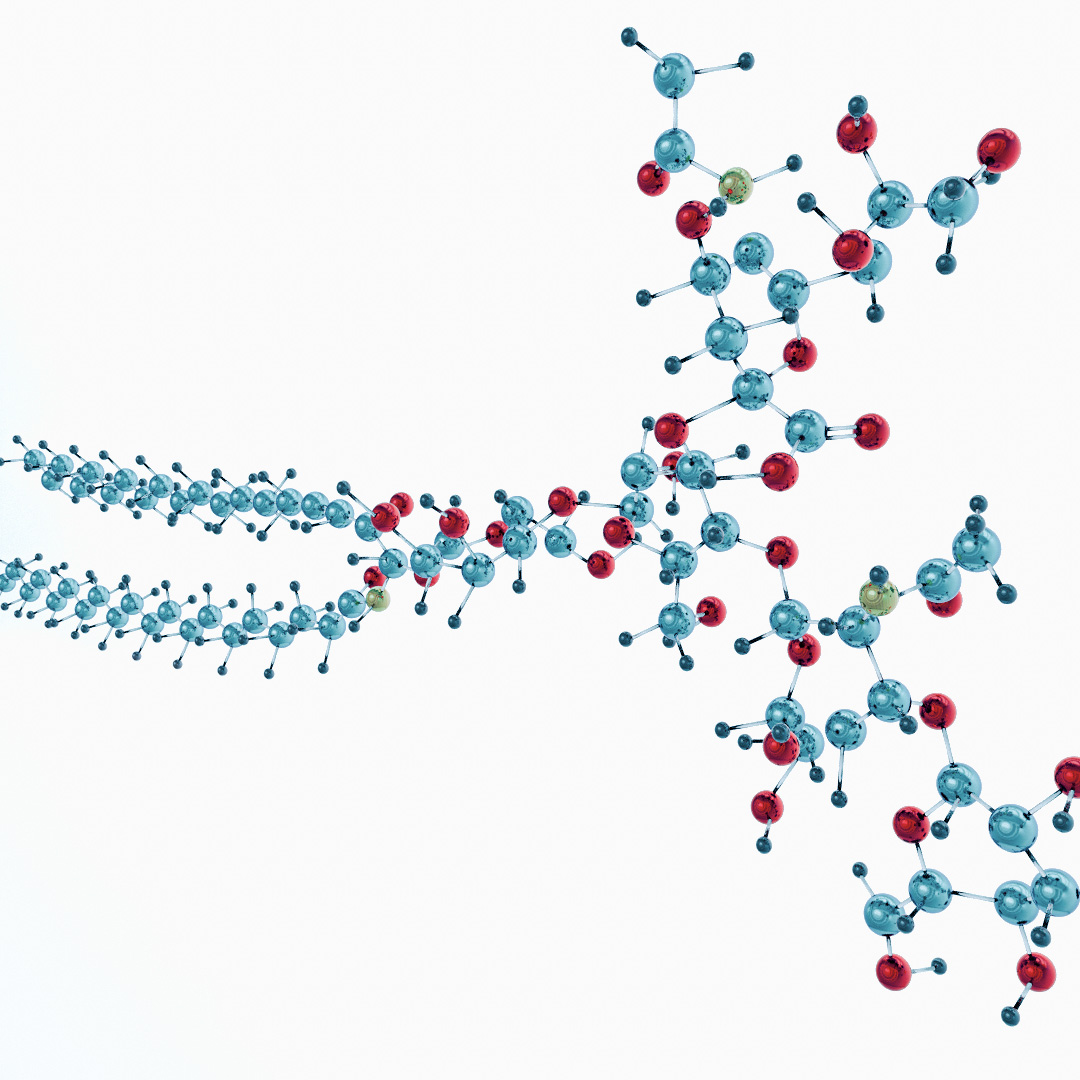
GM1 ganglioside (GM1) is a molecule found in high levels in the nervous system. It is a member of sialic acid-containing glycosphingolipids that are naturally present in the plasma membrane of most vertebrate cells.1 These molecules help nerve cells communicate with each other and maintain their structure and function. GM1 is particularly abundant in areas of the brain responsible for learning, movement, and memory, highlighting its importance in maintaining healthy nervous system activity.2
Research over the past several decades has shown that GM1 can support nerve growth, protect nerve cells from damage, and help repair injured tissue.3 Because of these properties, GM1 has been investigated as a potential therapy for a variety of neurological conditions, including stroke, spinal cord injury, Parkinson’s disease, and Alzheimer’s disease.3-7 Early studies suggest that GM1 may slow the progression of nerve damage and support functional recovery in these conditions.7
GM1 works in several ways to protect and repair nerve cells. It interacts with the fatty membranes that surround nerve cells, helping stabilise them and improve communication between cells.2 GM1 also activates signalling pathways inside nerve cells that are essential for cell survival, growth, and repair. These pathways influence processes such as calcium homeostasis, receptor activity, and gene expression, all of which are vital for healthy nerve-cell function.7-8
In several studies, GM1 has been shown to reduce damage caused by injury or disease. For example, it can limit cell death after a stroke or spinal cord injury and support the regrowth of damaged nerve fibres. These combined effects on cell membranes, receptors, and intracellular signalling explain why GM1 is considered both neuroprotective and neurotrophic.3
Clinical studies have explored the potential of GM1 in several neurological conditions. Research indicates that GM1 may support recovery after neurological injuries, such as stroke or spinal cord damage, by promoting nerve-cell repair and reducing secondary injury.1,7 In Parkinson’s disease, GM1 has been linked to improvements in movement, motor function, and daily activities, suggesting it may support nerve-cell health and slow disease progression.6
Early studies in Alzheimer’s disease and other neurodegenerative conditions also suggest that GM1 could help maintain nerve-cell function and communication, though more research is needed to confirm these benefits.5 Overall, GM1 has shown a strong safety profile and promising potential as a therapy that targets the underlying biology of nerve-cell injury and degeneration.
TRB has extensive expertise in neurology and a long history of research into gangliosides, including GM1. Our scientific focus includes studying the roles of gangliosides in nerve-cell biology and their relevance to neurodegenerative disorders.3
Our work builds on decades of experience in neurology, applying research on ganglioside biology and cellular mechanisms in neuroscience. TRB’s expertise ensures continued attention to research integrity, scientific rigour, and the study of nervous system biology.
Alter M; SASS Investigators. Ganglioside GM1 in acute ischemic stroke: the SASS trial. Stroke. 1994;25(6):1141–1148.
Guo Z. Ganglioside GM1 and the Central Nervous System. Int J Mol Sci. 2023;24(11):9558.
Aureli M, Mauri L, Ciampa MG, et al. GM1 Ganglioside: Past Studies and Future Potential. Mol Neurobiol. 2016;53(3):1824–1842.
Geisler FH, Dorsey FC, Coleman WP. Recovery of motor function after spinal-cord injury: a randomized, placebo-controlled trial with GM-1 ganglioside. N Engl J Med. 1991;324(26):1829–1838.
Svennerholm L, Brane G, Karlsson I, et al. Alzheimer Disease – Effect of Continuous Intracerebroventricular Treatment with GM1 Ganglioside and a Systematic Activation Programme. Dement Geriatr Cogn Disord. 2002;14(3):128–136.
Schneider JS, Roeltgen DP, Mancall EL, et al. Parkinson’s disease: improved function with GM1 ganglioside treatment in a randomized placebo-controlled study. Neurology. 1998;50(6):1630–1636.
Finsterwald C, Dias S, Magistretti PJ, Lengacher S. Ganglioside GM1 Targets Astrocytes to Stimulate Cerebral Energy Metabolism. Front Pharmacol. 2021;12:653842.
Lunghi G, Fazzari M, Di Biase E, et al. Modulation of calcium signaling depends on the oligosaccharide of GM1 in Neuro2a mouse neuroblastoma cells. Glycoconj J. 2020;37(6):713–727.